Trust the lab. Do not under any circumstance trust the theory!
One of the longest and still ongoing projects I've ever been involved in was studying the properties of tripeptide crystals that open and close their channels reversibly based on relative humidity and pH.
It's an interesting system and was well suited to constant pH molecular dynamics, which was a hot topic in the Tuttle Lab, where I worked at the time.
So, diligently, I wrote scripts and set up simulations for this peptide crystal under varying amounts of hydration and pH.
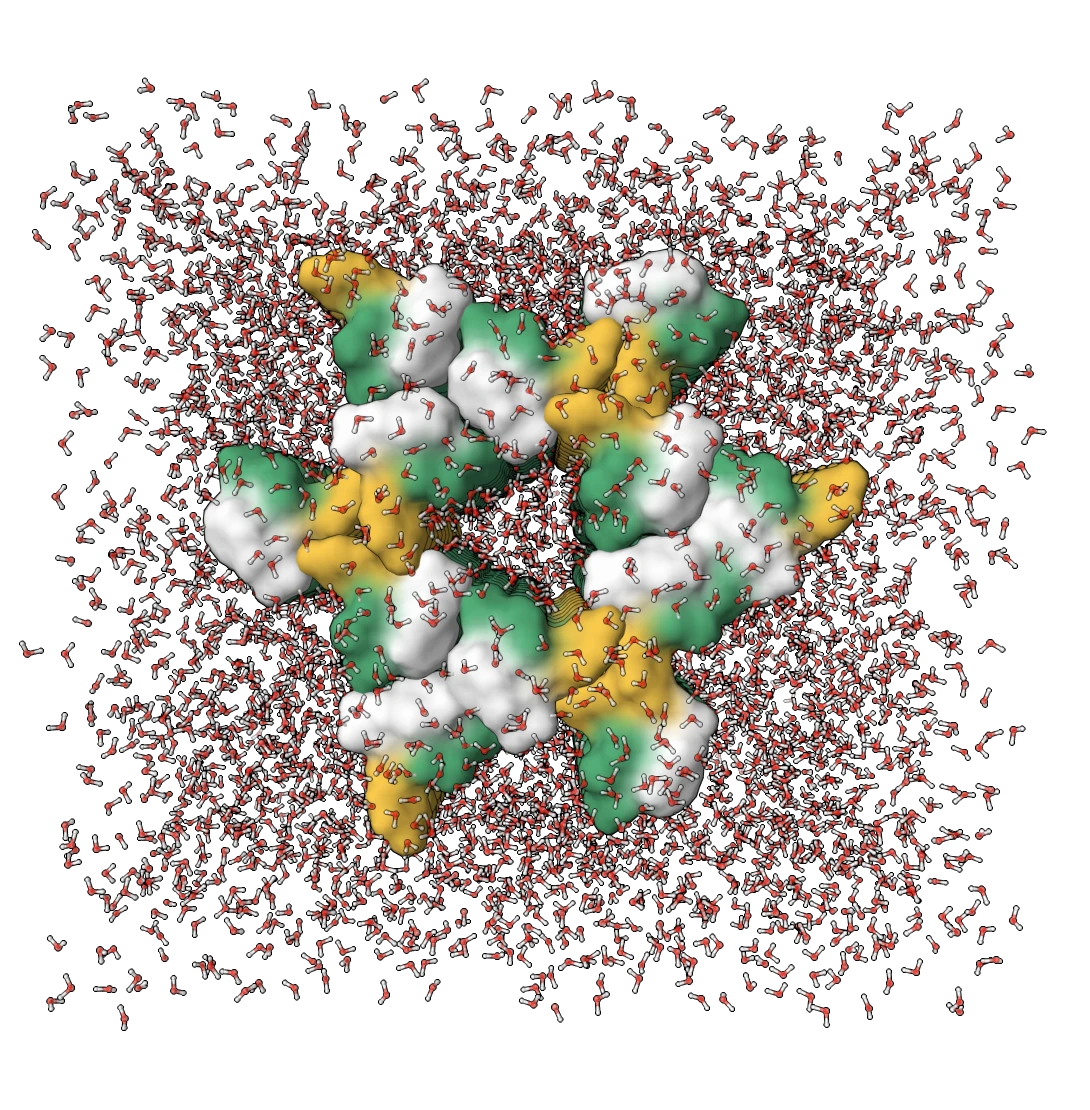
However, quite soon we found that the results didn’t really match the lab results from the US when it came to stability and pH.
Well, obviously, either I’d done something wrong, or the simulation methodology wasn’t up to the task (as was asserted by the experimentalist PIs on the Zoom calls). I dont remember the exact quote but I was told something along the lines of "Well the lab is real so your simulations are by definition wrong".
So, I set up bigger and better simulations. It’s a crystal, after all, so it cannot be all edges and there must be buried channels not exposed to the harsh continuum of water, and these should be stable! ... Unfortunately, not.
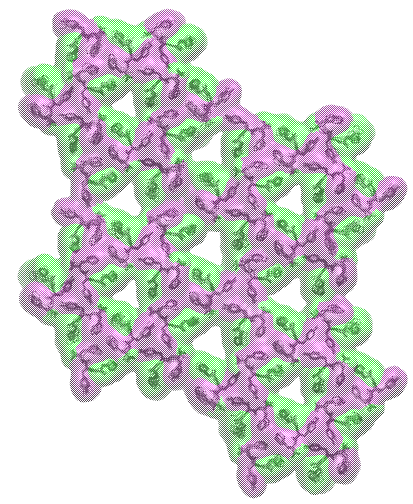
Eventually, and the whole point of this blog post, it was discovered that the PhD student in the American lab was making some mistakes around how pH was being controlled and that actually the simulations were right all along.